

If anything reinforces analyst predictions that the number of eSIM devices will grow 300% by 2030, it’s the range of eSIM device launches we’ve seen in Q1.
The categories integrating eSIM have expanded drastically with embedded connectivity across a greater range of devices than ever before:
-
More wearables embrace eSIM: At CES, Rayneo launched the industry’s first eSIM-enabled AR glasses.
-
Connected accessories for eSIM everywhere: uCloudlink announced a range of accessories that give customers "invisible" CloudSIM hotspots by embedding eSIM directly into daily items like fast-charging cables and travel adapters.
-
Bringing eSIM to legacy handsets: uCloudlink also demoed their 'eSIM trio' a physical SIM that transforms legacy handsets into eSIM-enabled devices.
The headline: eSIM is everywhere, and connectivity is no longer an add-on.
When Connectivity Disappears Into the Device

eSIM capabilities are embedded not only into more consumer devices, but becoming further ingrained within consumer lifestyles, whether an eSIM offering from your travel operator or the eSIM hotspots embedded into your travel adapter. For operators of all sizes, future success depends on their ability to serve this eSIM-dense ecosystem.
The shift demands new business models. MNOs and MVNOs need to support connectivity in more flexible ways that feel intuitive for the customer and mirror the current ecosystem - presenting both a challenge and an opportunity.
Lifecycle Management for Lifestyle Connectivity
Let’s start with the opportunity. MNOs and MVNOs alike have been at risk in recent years of falling into the commodity business trap. That's a painful place to be with pressure on revenue growth and severely eroded margins.
But operators can change this if they start thinking like lifestyle brands.
Not a pivot into designer handbags (unless they also start integrating eSIM), but in how they meet expectations around how connectivity integrates into consumer lifestyles.
If there is potential for eSIMs to be embedded in virtually every consumer device, then MNOs need to be able to deliver fluid, flexible, and frictionless connectivity across that entire ecosystem. When device manufacturers promise invisible connectivity, it has to work. That means operators need the infrastructure to back it up.
Delivering this ‘lifestyle connectivity’ starts with rethinking lifecycle management. Both the business models and the user experience need to change. The need to approach user experience with the same mentality as businesses catering to the lifestyle market.
Flexible connectivity across an eSIM dense ecosystem
-
Entering the out-of-the-box game: eSIM means MNOs and MVNOs are part of the customer experience from the moment customers unbox their device. This puts more emphasis than ever on delivering seamless onboarding to support both customer acquisition and retention. We see the opportunities this is unlocking as KPN begins selling eSIM via Samsung’s web shop, highlighting the possibility to enter the customer value chain at an earlier stage.
-
Dealing with shorter user cycles: The surge in devices has also changed how customers want to engage with their operators. eSIM gives customers the flexibility to instantly activate data for short-term travel plans, switch their provisioned devices more fluidly leading to much more short-term and flexible user agreements. Where operators once saw short cycles as a churn risk, they should now see them as a loyalty opportunity: frictionless service drives repeat customers.
-
Designing flexible, multi-device plans: If users want to connect via multiple devices and accessories for a complete connected experience, operators need to support this with flexible plans and fast activation that reflects the growing ecosystem of eSIM devices owned by each customer. This flexibility is where operators can gain ground with a value-added proposition that speaks to customer lifestyles and demands.
A Wholesale Shift
It is clear how operators need to adjust from a customer facing perspective, but wholesale eSIM agreements will be the lifeblood of meeting these changing customer expectations.
This is where it becomes essential to work with an end-to-end wholesale eSIM connectivity partner that gives MNOs and MVNOs the wholesale flexibility to accommodate new and evolving business models. From competitive and seamless roaming agreements to instant provisioning, delivering in an ecosystem with 4.9 billion eSIM connections depends on strong wholesale partnerships.
|
Customer Demand |
Wholesale eSIM Requirements |
|
Frictionless Onboarding |
|
| Support Flexible Bundles and Billing |
|
| Seamless Roaming Agreements |
|
| Compliance Without Complexity |
|
A Lean, Mean, eSIM-Ready Machine
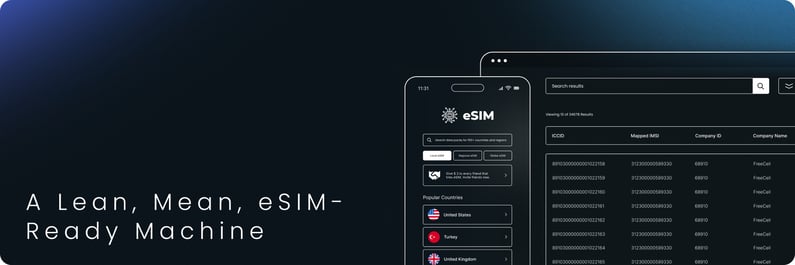
The eSIM-enabled device launches of 2026 so far, with more expected at next month’s MWC highlight why it is essential for MNOs and MVNOs to move fast. They need to act now to tailor their businesses for a new world of eSIM where connectivity is pervasive. The challenge is to do so without adding operational complexity.
That's where the right wholesale partner matters. Telna’s wholesale eSIM platform lets MNOs and MVNOs launch eSIM services fast, stay lean, and focusing on delivering services that align with customer lifestyles.
Telna is a market leader with years of experience at the forefront of eSIM evolution. That track record means operators can move quickly, confident they're working with a market leader that understands both the technology and the customer demands driving it.
Subscribe to our Newsletter! Stay at the forefront of the latest trends in connectivity services, 5G, and digital transformation.